Trung tâm phòng tránh và giảm nhẹ thiên tai

Trung tâm Chính sáchvà Kỹ thuật phòng chống thiên tai

Giao diện dễ tiếp cận vietnam english
Đăng nhập

Quản lý - Hợp tác - Cùng hành động

  • Trang chủ
  • Giới thiệu
    • Giới thiệu
    • Cơ cấu tổ chức
    • Chức năng - nhiệm vụ
    • Chiến lược phát triển
  • Tin tức
    • Tin Trong nước - Quốc tế
    • Bản tin Trung tâm
  • Trung tâm Thông tin
    • Sự kiện thiên tai
    • Kiến thức cơ bản
    • Cơ sở dữ liệu
      • Chính sách và Kỹ thuật PCTT
      • CSDL Ngân hàng cát ĐBSCL
      • CSDL Dân sinh kinh tế
      • CSDL Viễn thám
      • Thiệt hại và nhu cầu
      • Đề án nâng cao nhận thức CĐ
        • Ma trận dự án
        • Mạng lưới hỗ trợ kỹ thuật
        • Tài liệu Đề án 1002
          • Văn bản pháp quy
          • Tài liệu tham khảo
          • Tài liệu truyền thông
        • Theo dõi & đánh giá
        • Đánh giá RRTT-DVCĐ
          • Bản đồ RRTT-DVCĐ
          • Bản đồ khác
          • Báo cáo đánh giá
        • Kế hoạch phòng chống thiên tai
      • Hệ thống giám sát thiên tai
      • Hệ thống giám sát camera
      • CSDL không gian
    • Thư viện ảnh
    • Dự án Nông thôn mới
      • Cổng thông tin điện tử
      • Sản phẩm dự án Nông thôn mới
    • Công khai ngân sách nhà nước
  • Đối tác
  • Dự án
  • Lịch công tác
  1. Tin tức
  2. Trang tin chi tiết
  • Share this on Facebook
  • Share this on Twitter
  • Share this on GooglePlus

Many European residents are affected by natural disasters.

0:0:0, 05/02/2026 According to Vietnam News Agency correspondents in Brussels, citing a statement from the European Environment Agency (EEA), climate change is no longer a distant threat but is already directly affecting the lives of the majority of people across the continent.

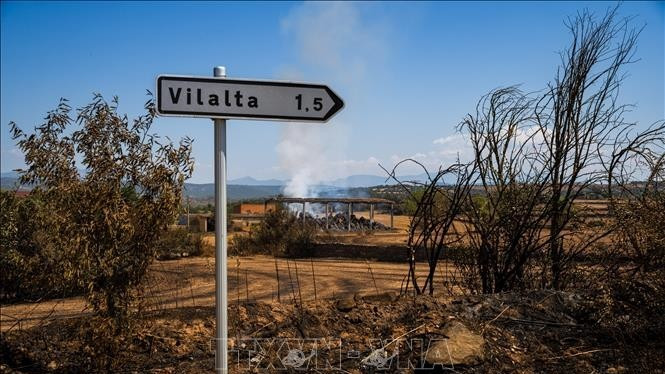
Khu vực bị tàn phá do cháy rừng ở Lleida, Tây Ban Nha. (Ảnh: THX/TTXVN)

An area devastated by wildfires in Lleida, Spain. (Photo: Xinhua/VNA)

However, access to preventive and adaptation measures against natural disasters remains marked by worrying inequalities.

Just last week, Storm Kristin made landfall in Portugal, claiming at least five lives and causing severe damage to infrastructure. In response, the Portuguese Government announced an emergency support package worth €2.5 billion to address the consequences and assist affected residents. This once again highlights how extreme weather events such as powerful storms, floods, wildfires, droughts and intense heatwaves are becoming more frequent and severe, largely driven by human activity.

To assess the level of impact and communities’ adaptive capacity, the European Environment Agency (EEA) conducted an online survey of approximately 27,000 people across the 27 member states of the European Union (EU). The results show that as many as 80% of respondents have experienced at least one climate-related hazard, with heatwaves being the most common.

According to the EEA, over the past five years nearly half of respondents reported feeling excessively high temperatures inside their own homes (49.7%) and at their workplaces or schools (46.8%), while more than 60% said their surrounding living environment had become unusually hot. The situation is particularly severe in densely populated urban areas.

In addition to extreme heat, Europeans have also reported other impacts, including an increase in disease-carrying insects (34%), storm damage (14.1%), floods (11%) and wildfires (8%).

The survey also reveals significant gaps in household preparedness. The EEA noted that one in five respondents has no protective measures in place at home to cope with extreme weather. Such measures include sun shading, cooling systems, flood protection, rainwater storage, disaster insurance, backup power supplies or emergency kits.

Among the measures adopted, installing sun protection devices (49.7%) and improving insulation for walls and roofs (47.6%) were the most common. About 32.1% of respondents said they had invested in or upgraded ventilation or air-conditioning systems over the past five years. However, the EEA cautioned that low-income households face the greatest difficulties in implementing cooling and home protection measures, particularly during prolonged heatwaves.

Regarding risk-sharing mechanisms, around 40.8% of respondents reported having disaster insurance. Nevertheless, the EEA warned that this figure should be interpreted with caution, as many people may not fully understand the scope and terms of their insurance coverage.

On the authorities’ side, more than half of respondents said they had received warnings about extreme weather through text messages or official channels. In addition, 43% had been exposed to risk-prevention campaigns, while 42% had complied with water-use restrictions during periods of drought.

Against the backdrop of increasingly rapid and complex climate change, the EEA stressed the urgent need to scale up preventive and adaptation measures, ensuring that citizens can access solutions at affordable costs. The agency also called on European governments to develop fair and inclusive adaptation policies to safeguard the long-term welfare and prosperity of society as a whole./.


Tin liên quan

  • Dyke Safety Prioritized from the Start of the Year
  • Science and Technology Must Be the "Lever" for the Water Sector’s Transformation
  • Spreading Humanitarian Spirit: Giving Hope to People in Flood-Affected Areas
  • Spreading Humanitarian Spirit: Winging Hope for Flood-Affected Communities
  • Dong Thap Takes Early Action to Cope with Drought and Saltwater Intrusion
  • Brazil: 55 people killed by floods.
  • Community-Based Disaster Risk Management
  • A Peaceful Tet for Disaster-Affected Communities
  • WMO Calls for Strengthened Early Warning Systems Amid Extreme Weather
  • Record Snowfall in Japan Paralyzes Transport, At Least Four Dead


  • Hệ thống giám sát thiên tai Việt Nam (VNDMS)

  • CSDL Quản lý rủi ro thiên tai dựa vào cộng đồng (Đề án 553)

  • CSDL Dân sinh kinh tế

  • CSDL Bản đồ sạt lở bờ sông, xói lở bờ biển

  • CSDL Không gian

  • CSDL Thư viện Chính sách và Kỹ thuật PCTT

  • CSDL Thiệt hại

  • CSDL Viễn thám

  • CSDL Khoa học công nghệ

  • Phần mềm hướng dẫn phổ biến kiến thức trực tuyến về PCTT

  • Trang Chuyển đổi số trong lĩnh vực Quản lý đê điều và Phòng, chống thiên tai

  • Phần mềm quản lý và giám sát camera

  • Phần mềm hỗ trợ xây dựng phương án ứng phó thiên tai

Thông tin thời tiết

Bản quyền © 2015 - Trung tâm Chính sách và Kỹ thuật phòng chống thiên tai

Địa chỉ: Số 54 ngõ 102 Trường Chinh – Đống Đa – Hà Nội.

Điện thoại: +84-436291511 - Fax: +84-437336647

Email: trungtamcsktpctt@gmail.com - Website: www.dmptc.gov.vn

Số người online: 726

Tổng số lượt truy cập: 83364